Thursday, July 25, 2013

Design lessons learned from Candy Crush


If you haven't been pulled in to the addictive mobile gaming wonder that is Candy Crush...I applaud and pity you. Congratulations on avoiding one of the most addictive gaming experiences I've had lately, and I'm sorry you haven't seen the brilliance and subtle evolution in its design.
I am here

Like any game that holds my interest for more than a couple days, I've taken some time to look at the elements of what makes me keep going back. We could all learn from the simple design strategies and application of cognitive science that makes Candy Crush a bar-setter for micro-transaction social games.

1. Don't introduce (or force) the social component until people are really invested. 
One of the things I hate about most social games is that they want you to get social right from the beginning. When I start a game, I don't know if I'm going to be playing it tomorrow, so what are the chances I want to invite my friends to a party I'm not sure I even want to be at yet? Candy Crush lets you keep playing and playing, and offering you to connect to Facebook, but waiting until late in the game to really push that incentive.

One of the things I don't like about the design is that after I did eventually connect to Facebook, my only options to move up a level were to ask my friends to help me or to pay $.99; I lost the option to play the mini-games gated every 24 hours to get to the next level. It pissed me off...and has resulted in my paying up. So maybe it's not a bad design decision after all...

2. Designing the social component around "help." 
One of the things that I find interesting about how Candy Crush pushes the social element is by framing social connection around helping other players. At each log in, the game recommends 5 of my Facebook friends who I can send a life to; more often than not, I say yes. I'm not giving up anything by sending friends lives, and it makes me feel good, like I'm helping someone out. It's also nice to see when people send you a life - like an unexpected pick-me-up to let me try to clear the jellies one more time.

To level up, you can also ask your friends for help. It doesn't cost them anything...they just have to send you a life. From a design standpoint, this giving and requesting doesn't impact your game play, but it DOES impact how often you log in. The more you log in, the more you play. The more you play, the more likely you are to get into a situation where you are compelled to make a microtransaction.

3. Leveling doesn't need to be a steady, consistent build.
I'm not going to lie, there have been some boards on Candy Crush that have taken me DAYS to pass. In the triumph of completing one of those boards, I have gone on the the next and beat it on the first try. My response? Hell yeah! I'm awesome! And then I realize that I'm falling right into the design strategy...Make me really work for some levels so that I feel like there is a big challenge I've overcome, then continue that "win high" with quick successive victories that eventually lead me to the next big challenge. When I'm stuck for days, it is the combination of those hard won victories and quick wins that keep me engaged and playing.

4. Social "shaming" can promote micro-transactions. 
One of the interesting design elements I mentioned previously is that once you connect to Facebook, you don't have the option to unlock the next episode through a 3-step game path that requires a 24 hour wait to start the next board once you've completed a board, in essence making you wait at least 48 hours to unlock the next episode. Instead you have the option of asking your Facebook friends for help in unlocking the next episode, or you can pay $.99.

When I first realized this, I was indignant and was NOT going to pay for the episode...I sent out a request to my friends. Shortly thereafter, I received from my friends the lives I needed to unlock the episode and on I played. Then I finished the next episode, and was faced with the same decision: ask friends or pay. I paid. Why? For one thing, it was quicker...paying immediately unlocks the next episode. For another, I really didn't want to be "that girl" asking my friends for help in unlocking episodes all of the time. It's one thing for me to send extra lives to my friends when I log in, but it's another to be begging for help. In the balance, $.99 seemed a small price to pay to leave my friends out of my game play.

5. Offer buy-outs at the highest point of need.
One of the common themes you'll hear from Candy Crush players is that when you get to the last move on a board that's particularly challenging or that you've been trying to beat for days, and you're one or two moves away from beating the board, you will pay the $.99 for 5 more moves. In that moment, you are weighing the dollar you could spend against the hours you've already invested, and the potential more hours that you might spend to get that close to winning again. Almost everyone I know has done it and when I've asked, the sentiment is consistent: it's worth it.

6. If the challenge seems surmountable, people will stay engaged.
Candy Crush is just a next gen Bejeweled, right? Let's be honest, we're just talking about matching candies on a board and trying to overcome each board's unique challenge. But, it's just a matching game. It's not rocket science, and it takes about 3 seconds to figure out the navigation and how to play. This is a game that is easy to start, easy to drop, can be played in small moments and that has established a well-balanced challenge-reward ratio. In other words, the challenge is not in figuring out how to play, it's in persistence and managing the time tension. These are attainable by everyone, making playing Candy Crush appealing to just keep on playing.

7. Use time as a tension point. 

The perceived value of time is important in promoting desired behaviors, like offering buy-outs at the time of need, described above. My time is valuable and I'm investing it in playing a game...how much is it worth it to me to pay for a next episode instead of waiting for my friends to help me out? How much is it worth it to pay for a few extra moves to beat a board versus playing that board over again, especially as you invest more and more time into beating a challenging board. The more you play a board, the more valuable that extra moves microtransaction becomes in saving you additional time to try again. The crying heart taunts you with the countdown clock of when a life has regenerated so that you can try again, creating another aspect of tension around time.

8. Make your success social. 


Candy Crush has a "Candyland" like progress map that shows you how far you've progressed along the path in comparison to your Facebook friends. I'm not going to lie, I look how far ahead of me some people are and strive to pass certain people (hey, I'm competitive! What can I say?). For each board, it shows you who has achieved the top 3 scores for that board from your friends as well. That helps benchmark what winning scores look like, as well as add in some competitive elements. When I see my sister on the top of a score board, I inevitably think, "Oh I can beat her!"  This one-two punch of a social progress bar, and a leaderboard for each game board keeps my competitive side active throughout the game, even though actual social interaction through the game is limited to providing help to others. It prompts both the "I'm going to beat you" and "here, let me help you" emotions that satisfy different types of game player motivations.

Every once in a while a game comes along that really hits the sweet spot (pun intended) of challenge and engagement that creates a pool of rabid fans. The design decisions implemented in Candy Crush should be a lesson for all designers who are seeking behavior-driving strategies in their designs. As with all design, it's important to know what behavior you want to elicit and design towards those metrics. From a product management perspective, I'd love to see the product plan for Candy Crush. From a learning designer perspective, it's important for me to identify what emotional responses simple design decisions in a matching game can elicit.

PS. I'm stuck on level 147. And that's my sister at the top of the leader board. Please send me an extra life, thanks.


Tuesday, July 16, 2013

Robots and Polka Dots: My big fat geek wedding

A few months ago, I had a bit of a breakdown over getting married. One evening, as John and I discussed wedding plans, my anxiety bubbled over and at some point I'm pretty sure I said something like "I want to be married to you, but I don't want to get married."

Needless to say, wedding planning is not my thing.

The next day, still overwhelmed and feeling sad and frustrated, John and I IM'd each other from work. We decided to both cut out early and meet at a park overlooking the ocean to have lunch and talk about the wedding. I was still holding on to my stubborn "I don't want to do this" attitude and John somehow knew that I needed to stop talking about caterers and online RSVPs and talk about the things that really mattered.

So we went here (which ultimately became the site of our "Last Day of Independence BBQ")

and we asked each other what was most important.

The kids.
Courtesy Ryan Calderon


Pictures.
Courtesy Amy Calcote
Making the ceremony meaningful.
Courtesy Ryan Calderon 


Really making this day "us."
Courtesy Ryan Calderon
Spending time with our family and friends.

Our rings.
Courtesy Ryan Calderon 

We ended up changing everything...we went from planning one day to four days of wedding festivities. We decided to get married in our beloved church instead of the beach where he proposed. We included some of our favorite places, and we tried some things we always wanted to since moving to Carpinteria. As soon as we stopped trying to plan the wedding we thought we should have, we ended up planning the wedding we really wanted. If you want to see the full wedding weekend agenda, you can check it out here: polkadotrobots.com

Which leads me to the story of our rings...
When John and I drove cross-country from Philadelphia to Carpinteria last summer to kick off our life on the west coast, we spent our last night on the road on the border of Arizona and California, right on the edge of the Mojave desert. We woke up that morning, saw a coyote outside of our hotel room and hit the road in search of coffee and a gas station. We were already on "E," but more focused on getting our coffee. We passed the first exit because there didn't appear to be any coffee options...we passed the second because we didn't want to get coffee at McDonalds. And that was it...there weren't any more exits. In fact, there wasn't anymore ANYTHING except desert and sun and mountains and heat. We hadn't traveled too far when we passed a sign: No service for 60 miles. At first we didn't panic. Sure, the gas light was on, but we were still a little perturbed that we didn't get any coffee. As we kept driving, we realized our situation: no cell service, no passing traffic, no idea how far the remnants in our tank would carry us or if we'd be carrying my mini poodle for 30 miles in midday desert heat to try to make it to a gas station.

I think it was probably at that point when reality set in. We rode quietly for awhile. One of us at some point made some suggestions about what we would do if we didn't make it to the next service station. We joked about who might get eaten first by the vultures (well, we were mostly joking...). We rode in silence again, holding hands. One of us noted that thankfully, we were coming down the mountain, instead of going up, which allowed us to coast. We were nervous.

And then, after almost an hour riding on fumes, we saw the service station. We pulled off the highway and up to the gas station pump, jumped out of the car and danced around. We had made it! It was pure elation, but also such a feeling of partnership, of love...we were in this together. When John went in to pay for the gas, he also bought me a present: a robot girl mood ring. She was perfect. I wore her every day since, even when her mood had turned to perpetual calm (blue) and the metal on her adjustable band left rust marks on my finger. She wasn't just a gas stop ring, she was the symbol of what we could accomplish together.

When John and I started talking about wedding rings, we knew that we wanted something that represented us. Unbeknownst to me, he contacted some jewelry designers, sent them a picture of my robot girl, and asked them to design some concepts. When he received the sketches, he broke down and showed me. While all of the designs were amazing, we knew we needed to recreate my robot girl ring, and get John a robot boy.

That's how we came to all of our decisions regarding our wedding, and really, our life: just be us and remember what's important and everything will just work out.  The ceremony was perfect. Our rings are perfect. Our kids were perfect. Our families acted like they had known each other forever. My sister and John's brother signed our wedding license as witnesses - I was overwhelmed to have them both there. We danced our first dance to our song on "our" beach where John proposed to me.

John even surprised me with a "Love Actually" inspired entrance by the choir at the end of our ceremony to sing "All You Need is Love" as we walked back down the aisle together as husband and wife.
Courtesy Ryan Calderon

Our wedding was perfect because it was us: loving, fun, silly, sentimental, surrounded by kids, family, friends and robots and polka dots. And now, every day I look down at my new, blingy robot girl wedding ring and remember that no matter the obstacle (deserts, wedding planning or otherwise), the important thing is we're in this together. 

Wednesday, June 19, 2013

Ready for launch

I've spent the better part of the last six months planning for a major feature launch at work that is
deploying next week. I've also spent the better part of the last six months planning for my wedding the following week. And the week after my wedding, I will be reviewing the layout version of my first book, which I have spent a good deal of the last two years writing and planning.

This is a banner summer.

How do you prepare for so many big "reveals"? How do you close so many chapters at once, not with a whisper but with a bang, while inevitably starting new ones?

I'm one of those strange souls who crave change. I get bored easily, love unexpected adventures, pursue my crazy ideas and get a little stir crazy if things start to stagnate. It's not the impending changes that are shaking me up: I'm excited to move on to the next work project, to be MARRIED (yay!) and to finally have my book in my hot little hands.

No...what's got my nerves on high alert is that I'm about to reveal who I am, who I really am, in so many aspects of my life. Professionally, I'm about to show what all my hard work has led to when these features launch. There will inevitably be bugs, and criticism, and Monday morning quarterbacking of all of the decisions we made in our design and execution of these features. There will be kudos and celebratory drinks too...and then we'll get back to work. But the success or criticism of the work and I and my team have done will linger and I'm nervous with anticipation.

The very next week, I'm about to put on what can only be described as my big, fat geek wedding. No, we won't have hundreds of guests, but we will be embarking on 4 days of celebration that will include more robots, polka dots and geek references than I can possibly mention. Our ceremony is deeply personal and meaningful, and frankly, fun and a little wacky. It should be no surprise; John and I and our six amazing kiddos will be perfectly reflected in every part of the ceremony. And I'm SO nervous. Not to get married...that's the easy part. What will be tough for me will be revealing so much of who I am, laying it out there for everyone to see. While I love public speaking and it's no surprise to anyone who knows me that I'm a huge geek, I'm about to open up my heart for everyone to see inside. That's new and different and terrifying.

And then...the book. Finally. Holy cats, it has taken me longer than I could have imagined. I try to be gentle with myself and acknowledge the reality of the context of my life while I was writing this book, but if I use the analogy that writing a book is like having a baby, this one was like carrying one baby for two pregnancy terms. If you have had a child, you know that at about month 8, you'd do just about anything to get that baby out of there. Yeah...it's been like that for me for over a year. Now that the book is about to be hitting the Amazon shelves, I realize that someone might actually read it. That someone will undoubtedly have an opinion on what they've read.

Aaaaaack!

So no, writing a book is not like having a baby, because everyone knows that when you see a baby, no matter how ugly that baby is, you don't EVER mention your opinions to the mother. Not so much with a book. You write it and invite others to read it (hopefully buy it then read it!) and then it's theirs...theirs to critique and analyze and laud and deconstruct. Probably even misunderstand and take out of context. It's out there and you are laid bare, having opened yourself up to the experience of others judging your work.

These things would not be a big deal if I didn't feel passionately about the work that I do, or my feelings for John and our children, or what I have written. These things define me and I'm about to throw it all out there. Everyone's about to see ME, all different aspects but all me.

Two summers ago, I got my first tattoo. It's a modified quote from Teddy Roosevelt: 'if she fails, at least she fails by daring greatly." The significance is hitting me more than ever; if you want any chance at doing great things, you have to throw yourself out there and do them.

I'm about to dare greatly, my friends. If I believed in it, I'd ask you to wish me luck ;)


Wednesday, May 22, 2013

Flip Your Training presentation at ASTD ICE 2013 #astd2013

Yesterday I presented at ASTD ICE on how to flip your training and design for practice in the classroom. It was a full house and I had so much fun presenting! For once, I took a picture from the stage...it might be too small, but if you look closely, you'll see people in the audience with their hands raised, indicating if there was an empty seat next to them. This pic was taken right before I got started, and I was amazed at the cooperation in the audience to make sure everyone who wanted to attend could find a seat. I found out later that they put up the "Full Capacity" sign after everyone in the audience actually made sure it was really full capacity...not an empty seat in the house. That's teamwork, people. It seriously warmed my heart. I truly had the best audience at the conference.


Here are my slides, although the good stuff was in the presentation/conversation/discussion. Very excited to talk more on this topic; it's a great tie in to what I do at lynda.com and to my upcoming book, Immersive Learning. 


Thanks to all that attended and tweeted and waited to talk to me afterwards. Thanks especially to the gentleman who reminded me afterwards about the different rescue strategies for choking versus cardiac arrest (see? this is the guy I want in the room if I ever need rescuing!). 

I'll post more on this topic soon, as well as my reflections on ICE. Please drop me a note if you'd like more info on my presentation.

For those of you who requested: I realized I included my analysis interview questions in my book! In an effort not to cannibalize my own writing, I'll check to see if it's kosher to share it here or if it's a book "exclusive." Thanks for your interest, and patience! (this author thing is all new to me...)


Friday, February 15, 2013

Data is meaningless out of context: thoughts on the Tin Can API (xAPI)


Just posted a comment on Dr. Eric Fox's blog post from last fall on his thoughts on the Tin Can API:  A Behavioral Scientist's Initial Thoughts on the Tin Can API, Big Data and Learning Analytics. If you haven't read it, you should. My comment to him is re-posted below. Let's keep the conversation going. 


Data is meaningless out of context
Hi Eric,
GREAT post and happy to see you've delved into one of my biggest issues with the Tin Can API. Ironically, someone pointed out this post to me, having just left ASTD's TechKnowledge conference where there was continued buzz and interest. As a immersive learning designer and someone who has struggled with how to quantify practice into meaningful data, I am thrilled that there maybe an emerging standard that could help capture that data. The problem, as you correctly point out, is that reporting activity neither demonstrates learning nor performance improvement.
The hard work is in establishing actual performance metrics and measuring improvement through various learning activities. Simply reporting that you did something doesn't show qualitatively OR quantitatively whether that activity has any impact on what you know, or what you can do better.
I see potential here, but it troubles me that people are too "oooh! shiny!" about one minor piece of a much bigger piece of work, namely, correlating activity to performance. There are A LOT of potential problems with the Tin Can API, and so far, I haven't seen any best practices, use cases, or case studies that demonstrate its most effective use. Another problem? Those directly involved in the creation of the Tin Can API jumping into every discussion and squashing the much needed conversation among the rest of the community. Much like a community manager who tries to force conversations in a certain direction, there has been much talk in the industry about our inability to have deep conversations about the pros and cons of the Tin Can API without the developers and evangelists inserting themselves and trying to guide the conversations. Like pushy sales people, they are becoming a turn off for people who want to research, investigate and share their own conclusions. If I want to hear the sales pitch, I'll talk to a sales person. If I want to talk to my peers, I go to social media. Unfortunately, the sales people have hijacked these social conversations and are creating an atmosphere where no one wants to participate.
It reminds me too keenly of my experience with virtual worlds...the developers so in love with what they had built that they stopped listening to the concerns, needs, and objections of consumers and their potential customers. When you build something, you sometimes get too close to it to be able to see the chinks in the armor. When developers start arguing with naysayers, it's a clear sign that it's time for them to let go. Like an artist, you can have intention with your work, but the true meaning is what every person brings to it. It may be time for the developers to step down, and let practitioners lead the next phase of the discussion to help the Tin Can API survive its inevitable fall into the "trough of disillusionment."
Let's hope the conversation continues and that the real problems with the Tin Can API are not ignored. No system is perfect, but ignoring the problems, or trying to squash the conversation about them, does not make them go away. I'm hopeful that we can all learn from each other in making the Tin Can API useful and meaningful.

Thursday, February 14, 2013

A love story for Valentine's Day

When I explain my current family situation to, well, anyone, I get looks of wonder, a clear feeling of "I don't know how you do that," and sometimes even pity.


Let me tell you: My life is non-traditionally glorious because it's full of love.

Love comes and goes in your life. Family, friends...it's amazing how we all evolve together or grow apart. When I say that the last few years have been the most challenging of my life, it's because these last five years have challenged every belief I ever held about love and made me see who I really am.

Several years ago, I made a series of bad choices. Some were clearly my fault, some were guided by broken promises. My marriage to a wonderful man was failing because it turned out that the life we had built together wasn't making either of us very happy. I met someone else who mirrored every hurt I was feeling and who said all the right things to me. The timing wasn't perfect, but I told myself, "when is it ever, really?" As I ended one relationship and another was beginning, I saw an end to my loneliness in sight.

Words are easy. I was so naive, so blind in my faith in his words that I let myself circle deeper and deeper into a situation that could never end happily. The lies that he perpetuated in every aspect of his life, that I knew and accepted, only foreshadowed the depth of the lies he was telling me too. I thought I was too smart to be deceived, but I believed everything he told me. Why? Because I wanted to. I wanted to believe the pictures he painted for me with his words, I wanted to believe in the future he described, because the present was miserable and lonely. Having faith in him was directly tied to my faith that life would get better.

Over time, I lost more and more of myself and accepted smaller and smaller pieces of happiness. The final straw: a holiday weekend where he texted and called me with detailed descriptions of what he was doing at home alone, all the while he was away for the weekend and not alone. When I confronted him, he blamed me, told me that I didn't want to know the truth.

Actually? Yes, I did.

I hold myself to unachievable standards in all things, and usually that makes me spend a good part of each day feeling like a failure. It's not the rational part: I see the things I've accomplished, but more often I focus on the things that I haven't done, that I screwed up or outright failed at. There's lots of those, for sure. But this failure, this acceptance of lies and broken promises and holding on so tightly to one path to happiness, this failure broke me. It broke my heart, it broke my faith in myself, and it broke my trust in words.

So far, this isn't much of a love story, huh?

When I was at my lowest, I took a risk. I went on a date. Worse, I went on a blind date with someone I had only met online. That date could have made for a really funny anecdote of bad chemistry and deal-breaker personality quirks. Instead, it led me here, to the happiest I've ever been.

When you have nothing to lose is when you're the most honest. I wasn't looking for a relationship; I don't really know that I was looking for anything more than getting out of the house and having a drink, to be honest. On our first date, I'm pretty sure I said anything I could think of to try to scare John off. My divorce wasn't final. My ex lived in the apartment in the lower level of my house. I have three kids. I was still shaking free from that horribly toxic relationship. No matter what I threw at him, he laughed at me, somewhat incredulous that we shared such similar paths. He had his own stories, and his own three kids. We joked that I was probably a crazy cat lady, and that he was just uncovering more of my cats. We talked for hours, closed the restaurant down, and left each other awkwardly in the parking lot that night without a good night kiss.

It's hard to believe that was only a little over a year ago. In the months that followed, we stayed honest about our tender but healing wounds. He did his best not to scare me off with too much attention and I did my best not to run away to spare him all of my complications. It seemed too easy between the two of us. Friendship, laughter, excellent adventures...and honesty. He always kept his word. He's got an infectious laugh and killer dimples. It took me a little time to see myself as he seems to see me. It's taken even longer for me to forgive myself for my past mistakes, no matter how warmly he embraced me and accepted them as part of who I was and who I am. Sometimes I still need him to remind me.

Oh yeah, we also got tattoos...
In a whirlwind year, we moved across the country, finalized our divorces, bought a house, started new jobs and integrated our kids. My ex moved here, found a new job, a new house...he's part of our crazy blended family too. Six kids, two dogs, my ex, John and I.

I get it. I know why people look at me in horrified amazement.

I know these things: I am loved. I have a partner who is true in all things and who I can depend on for anything. He is my constant reminder of what good looks like. I appreciate him not just for what he does but for who he is. I have an amazing mix of kids who each carry pieces of my heart and who teach me and help me grow as a mother and as a person. I laugh every day. I know what is important. I will never settle for anything less than ecstatically happy ever again.

It's an amazing adventure and I can't wait to read the next chapter in this love story.


Tuesday, February 5, 2013

Your success metrics aren't unique (or, why are we making analytics so hard?)

Last week I had the pleasure of attending TechKnowledge 2013, including giving a workshop on game design with Karl Kapp and presenting a concurrent session on immersive design. Two action-packed days in San Jose, for sure, and for once I got to see some of my esteemed colleagues' presentations as well.

I was most excited to see Ellen Wagner present on learning analytics and get a sneak peek into some of the work that she's been doing with the Gates Foundation. I was not disappointed; I loved hearing Ellen's practical advice to the packed room on how to approach analytics and not be intimidated by big data and the necessity of quantifying learning...or improvement, really...for our non-learning business colleagues. I appreciated her encouraging us to be able to frame the value that we bring to the organization in business terms without abandoning our expertise that qualifies us to take on an important organizational leadership role.

Watching Ellen's presentation left me thinking (which is normally a very good or very dangerous thing).

Every presentation that I've seen on analytics and big data end with the same call to action: "now, go back to your organization and figure out what you should be measuring."

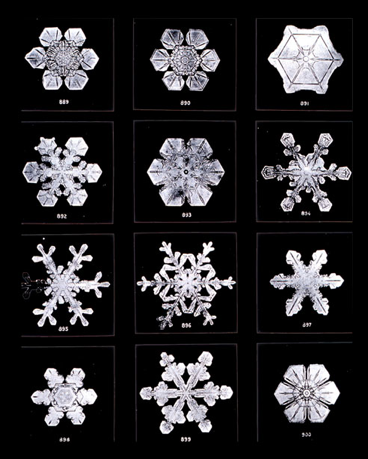
Photo by WH "Snowflake" Bentley
Here's my challenge to you, my esteemed learning colleagues: shouldn't we all be measuring (basically) the same thing? We all suffer from the snowflake syndrome (I'm just like everyone else! I'm unique!), but to be fair, both statements are true. The real question is how much are we alike and how much are we different?

About ten years ago, I was working with a gentleman who had done an in-depth analysis across 15+ pharmaceutical companies, looking at what made their sales representatives successful. He found that 80% of the success indicators were exactly the same across all companies. The unique 20% related to the type of product, the therapeutic market the drug was being sold into, and the corporate culture differences among the companies.

Now, if you're a pharmaceutical company, where do you spend your analysis energy, knowing this? Right. Don't worry about identifying success markers for the 80%: use the identified metrics, provide training and support for those areas, and spend your analysis time identifying what the other 20% are that are unique to your company. EVERYONE should be measuring that 80%...that's baseline. Figuring out the 20% is what differentiates you from your competitors and supports your brand.

Could the same analysis be achieved for call center support? Project managers? Database engineers? Are there consistent success metrics that are common across industries?

If we could identify the success metrics across within or across industries, we wouldn't have to start from scratch to determine our analytics. We SHOULDN'T have to start from scratch. Don't we know what these things are? Can't we say, "Hey, you want to measure your organizations' success and performance improvement? Here is 80% of what you should be looking at, and what it means. Now, figuring out the 20% that's unique to your organization is up to you." (I'm not saying that it's literally 80% for every job function or every industry...but you get the idea.)

As learning professionals, we should know these benchmarks for our industries. If we don't, that is our very first starting point: find the "80%." What makes us the same? What makes us unique? Identify it, benchmark it, measure it. Then? Spend your time analyzing what makes you better than that 80%.